


Fellowship
Fellowship Program Curriculum
Sample Schedule
Each year, fellows complete a balanced mix of core and elective rotations designed to build strong clinical foundations while allowing flexibility to pursue individual career goals.
Typical Yearly Breakdown
Elective options include:
Inpatient Experience
Fellows rotate on two general ID consult teams and a dedicated transplant ID service, gaining experience with a wide range of complex and high-acuity infections.
Outpatient Experience
Fellows participate in one half-day continuity clinics per week, following their own panel of patients under direct faculty supervision.
Clinic is located at Jackson Medical Mall, where fellows see general ID, HIV care, and post-hospital follow-up. During ambulatory rotation, fellows also rotate through the following specialty clinics:
Clinical Microbiology
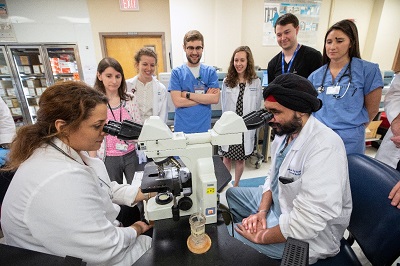
Fellows spend one month in the Clinical Microbiology Laboratory, working directly with laboratory technologists and the Medical Director.
Didactics and Conferences
A structured conference series provides comprehensive coverage of clinical and foundational topics in infectious diseases.
Fellowship Program Conferences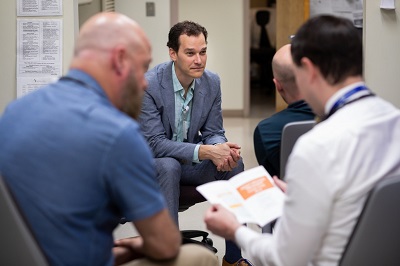
Fellows are encouraged and supported to attend national meetings such as IDSA, SHEA, CROI, and ICAAC, with opportunities to present scholarly work. The ID division provides funding for attendance (without requirement of presentation of scholarly activity) at one national conference during fellowship.
Research and Scholarly Projects
Fellows are encouraged to explore their curiosity and turn real-world clinical questions into meaningful research. With support from dedicated faculty mentors, fellows can get involved in everything from case reports and quality improvement projects to clinical and lab-based research.
You will have dedicated research time built into your schedule to focus on your projects, analyze data, and prepare presentations or publications.
Our division has a strong research network — including experienced research nurses, coordinators and lab facilities — to help you every step of the way.
Many fellows present their work at conferences or publish during training, gaining valuable experience that helps launch their academic or clinical careers.
The UMMC Infectious Diseases Fellowship offers a flexible, comprehensive, and mentorship-driven curriculum that balances clinical excellence with academic growth—preparing fellows for successful careers in clinical practice, public health or academic medicine.